Flea
Key clue: jumps, narrow from the side, enlarged hind legs.
Compare fleas →Evidence triage · About 2 minutes
Use what you can observe—shape, movement, size, signs and location—to decide what the evidence supports and what to do next.
Browser-only checker
Your selections stay inside this page. Nothing is uploaded, stored or sent to us.
Fast comparisons
Key clue: jumps, narrow from the side, enlarged hind legs.
Compare fleas →Key clue: visibly hairy or bristly, often near natural fibres.
Compare larvae →Key clue: adult has eight legs and no antennae.
Compare ticks →Key clue: much smaller, pale and often associated with damp.
Compare booklice →Better evidence
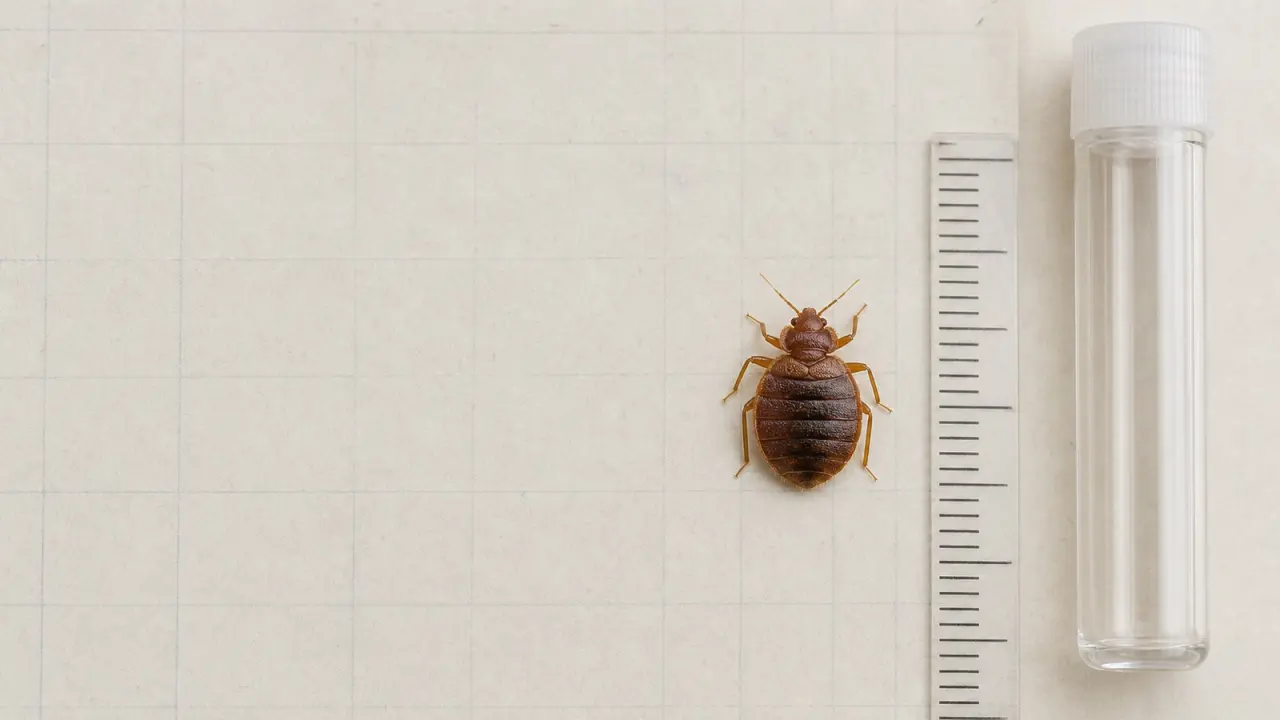
A competent identification is easier when the specimen is intact, photographed from above and labelled with where it was found.
Follow the capture steps →Health note: NHS guidance says bed bug bites are often itchy and usually clear on their own. Seek advice when symptoms are severe, spreading or infected.
NHS bed bug guidance ↗